Understanding Brain Injury
Over 2 million Americans live with aphasia. Most people have never heard of it.
Aphasia, apraxia, and cognitive deficits from acquired brain injury affect millions of people. They change how a person communicates, thinks, and connects with the people they love. Tendly was built for that reality.
Acquired Brain Injury
An acquired brain injury (ABI) is any brain injury that occurs after birth — from stroke, traumatic brain injury, oxygen deprivation, or other causes. Stroke and TBI are the most common, and the effects can be wide-ranging and long-lasting.
Aphasia
A communication disorder caused by brain damage. People with aphasia know exactly what they want to say — they just can't always get the words out. It's like being fluent in a language and suddenly having the words locked behind a door you can't open.
Apraxia of Speech
A motor planning disorder often found alongside aphasia. The brain knows what it wants to say but struggles to coordinate the movements required. A person may know a word perfectly and still be unable to produce it on demand.
Together, aphasia and apraxia can make spoken communication exhausting, frustrating, and isolating — for the person living with it and for the people who love them.
The tools that exist weren't built for this
Most communication apps assume you can type fast, navigate complex menus, and learn new interfaces quickly. That describes almost no one living with the effects of an acquired brain injury.
Standard AAC tools are expensive, complex, and often designed for children. General purpose devices have tiny buttons, require reading ability, and weren't designed for someone relearning how to communicate after a brain injury.
And everyone around them — family, friends, caregivers — are largely on their own. Cobbling together workarounds. Carrying the weight of communication. Struggling to stay connected to someone they love.
There is no mainstream, free, AI-powered communication tool designed specifically for people with aphasia, apraxia, and cognitive deficits from acquired brain injury.
Meet Tendly
A free AI-powered communication platform built for people living with an acquired brain injury — and everyone who loves them. Built by a husband and caregiver, for real life.
A calm, distraction-free space for your person
Large buttons, clear visuals, and AI that does the heavy lifting. Designed for people who struggle with traditional communication apps.
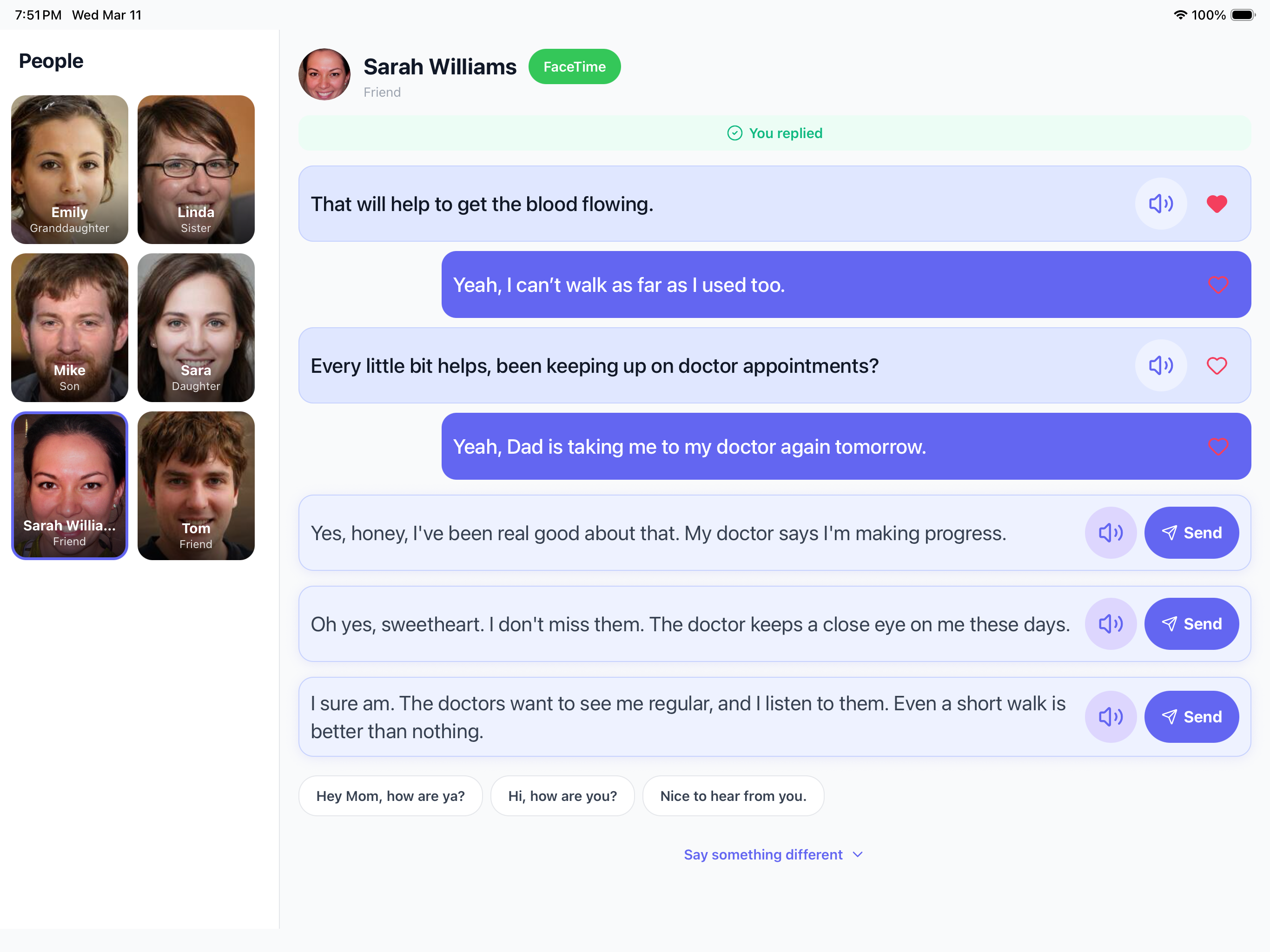
- AI-powered reply suggestions — tap to send, no typing needed
- Large photo tiles to find people — associate names and faces
- Messages are spoken aloud — incoming messages are read aloud for easier understanding
- Independence — communicate on your own, without someone mediating every conversation
In early access — coming to the App Store soon
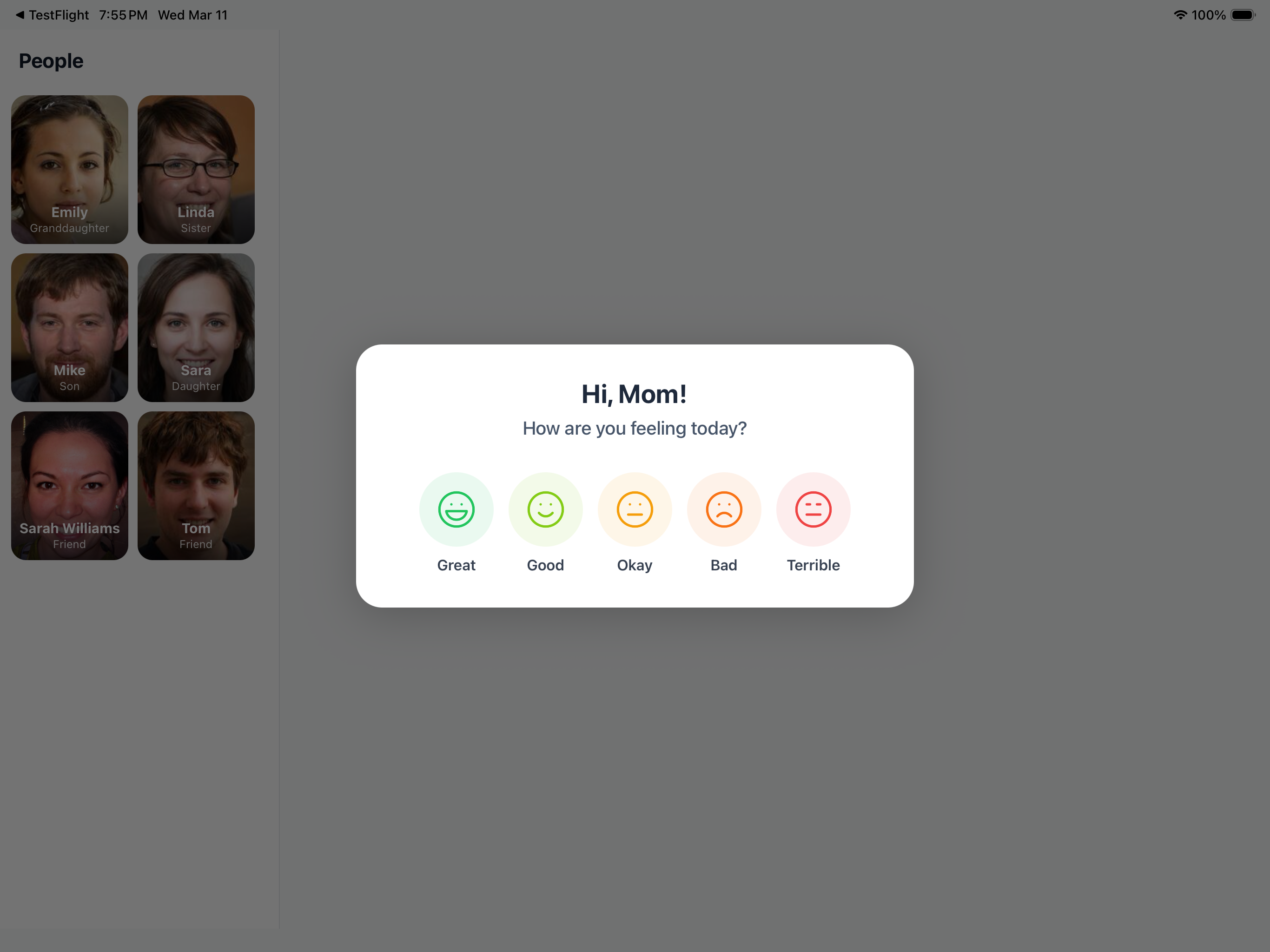
A gentle daily check-in, designed for one tap
One tap. That's all it takes. Five faces, no words, no pressure. Just a quiet moment to say how you're feeling today.
- One tap — no typing, no reading, no decisions to make
- Shows up at the same time every day, so it's always there when you need it
- Your people can see how you're doing, so you don't have to explain
- Helps Tendly suggest responses that match how you're feeling right now
The app family and friends download to stay connected
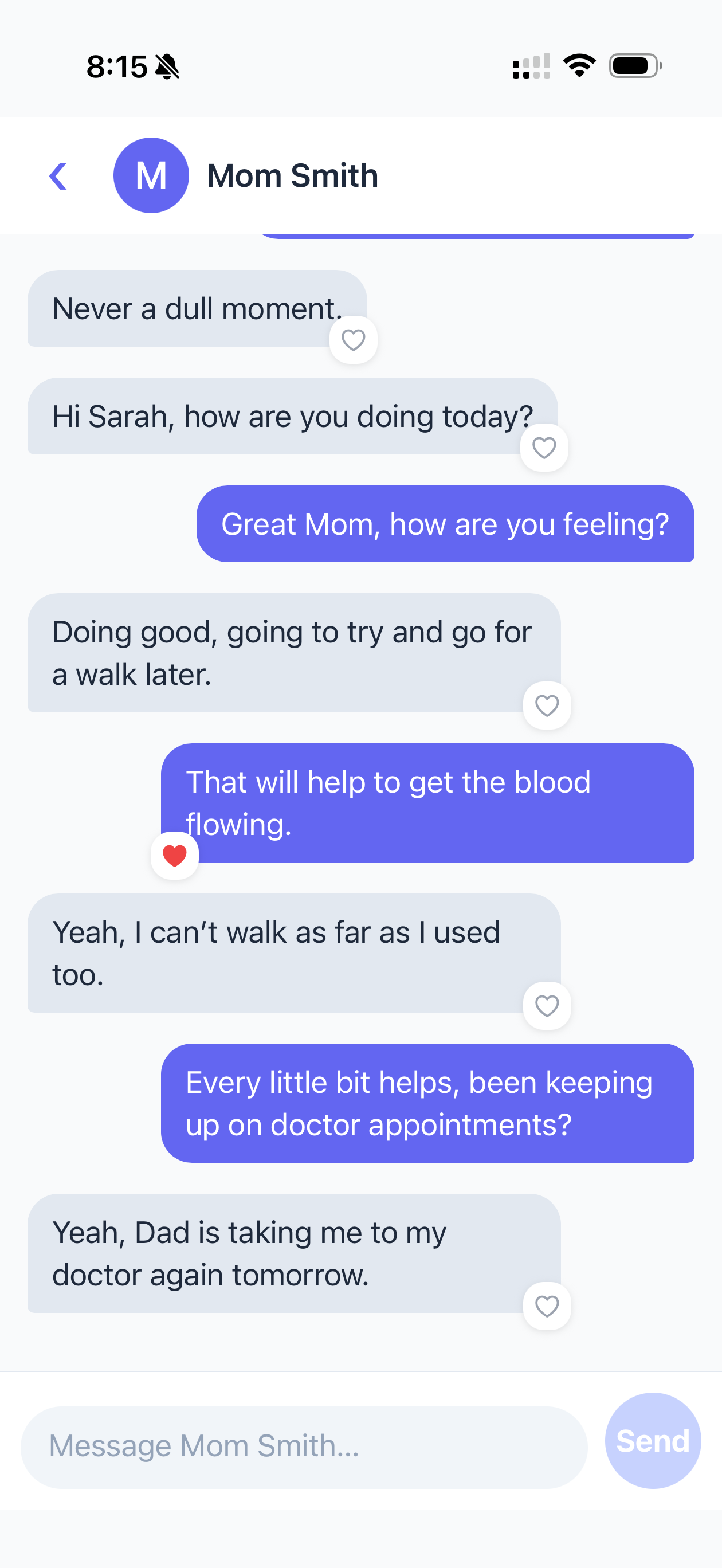
A simple companion app that keeps the people who matter most connected — without requiring anyone to navigate a complex platform.
- Simple messaging with large, readable text
- Instant notifications when they respond
- Free on the App Store — scan a QR code to connect
- Available on Android soon!
Why Tendly is different
It's free
No subscription, no paywall. People with acquired brain injuries and their families are already carrying enormous burdens. Cost should not be one of them.
Built on real experience
The founder's wife has aphasia and apraxia from a brain injury. Tendly was built to solve real problems in a real household — not hypothetical ones.
AI that actually helps
AI assists with communication — helping bridge the gap between what a person means and what they're able to express. Not a static symbol board. An intelligent tool that adapts.
Calm by design
Every part of the interface is designed to reduce cognitive load. People with brain injuries experience fatigue and sensory sensitivity. Tendly takes that seriously.
Respects privacy
Communication is deeply personal. Tendly is built with encryption, minimal data retention, and security as a default — not an afterthought.
For the whole circle
Not just the person with the injury — Tendly supports caregivers, family, and friends too. Because everyone in the circle needs support.
The numbers
2M+
Americans living with aphasia
180K
New cases diagnosed each year
800K
Americans have a stroke each year
1.5M
Hospitalized with a TBI each year
"Aphasia takes words away.
Tendly gives them back."
Built by a husband and caregiver. Designed for real life.
Get in touch
Tendly is currently in private beta. If you're a caregiver, speech-language pathologist, or part of an ABI community organization and would like early access, we'd love to hear from you.
support@tendly.lifeAndroid coming soon